

Surveillance turns signals into action.
Pakistan's surveillance system looks for poliovirus through children with acute flaccid paralysis, sewage sampling and targeted stool surveys.
Detecting poliovirus wherever it is circulating.
The programme combines surveillance of children with acute flaccid paralysis and testing of sewage samples across the country. Together, these systems help locate transmission and guide immunization response.
Acute Flaccid Paralysis (AFP) Surveillance
AFP surveillance is the programme's core method for finding possible polio cases. A sudden onset of paralysis or weakness in a child under 15 is treated as a signal for investigation.
Case signal
Sudden weakness or paralysis in a child under 15.
Laboratory Confirmation
Stool specimens are tested at the Regional Reference Laboratory in Islamabad.
Genetic Tracing
Detected viruses are analyzed and compared with other strains.
Programme Response
Findings help determine the most appropriate immunization strategy.
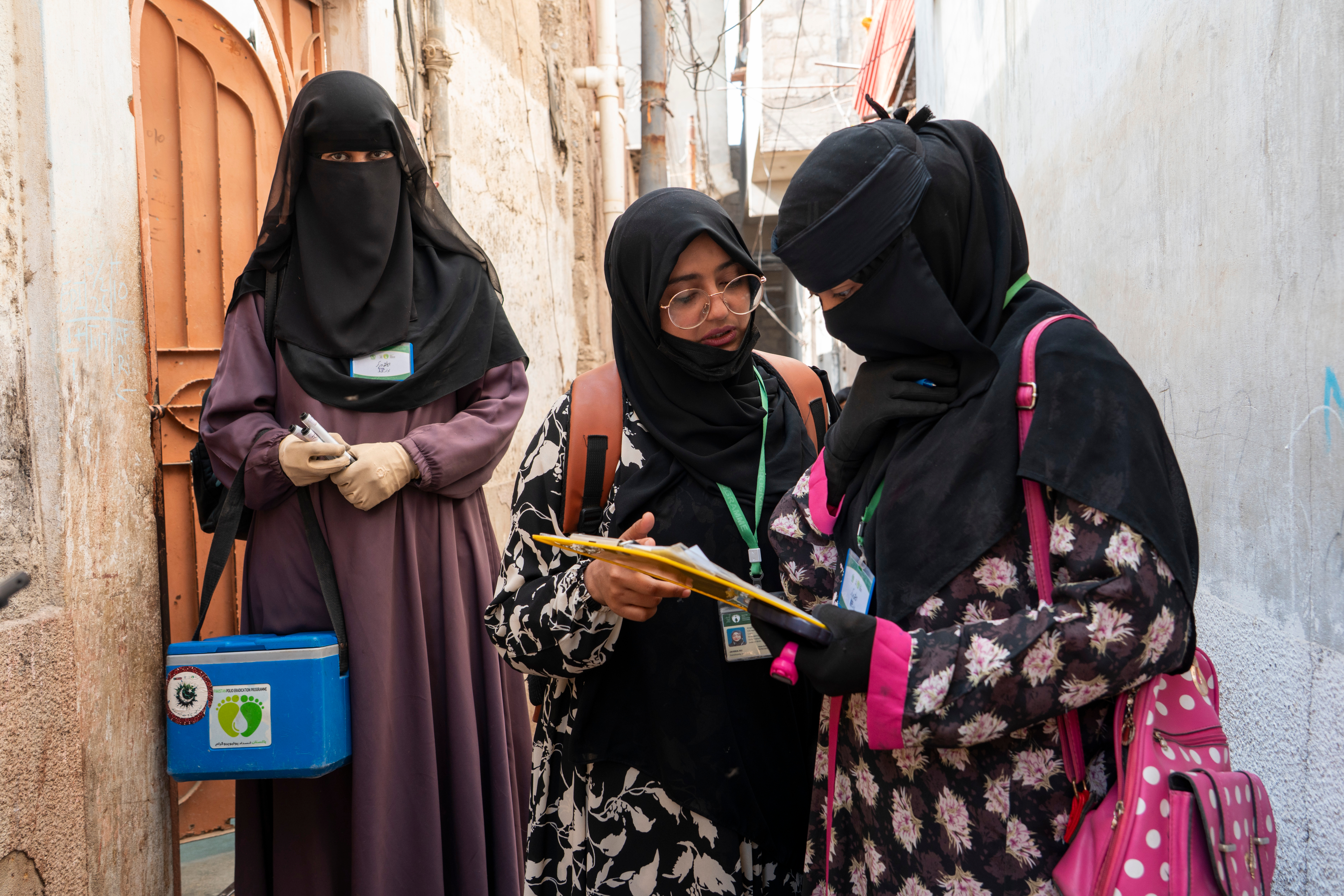
How the system works.
Different surveillance streams feed one decision-making system so teams can respond to transmission as precisely as possible.
Detect
A sudden paralysis case, sewage sample or targeted survey creates a signal.
Collect
Stool or environmental samples are collected through the surveillance network.
Test
Samples are tested at the Regional Reference Laboratory for Polio Eradication.
Trace
Further testing can compare virus genetics and identify related transmission chains.
Respond
Findings help shape the immunization strategy used to prevent further spread.
Polio Cases & Vaccination Coverage
Explore the progress of polio vaccination efforts and polio cases in Pakistan from 2015 to 2026.
Last Updated:
Testing Stool Surveys From Healthy Children
Periodic stool surveys are carried out among children in high-risk populations who may carry poliovirus without showing signs of paralysis.
- 1 Used where virus circulation may be difficult to detect through regular AFP surveillance.
- 2 Focuses on selected high-risk populations.
- 3 Adds evidence about silent poliovirus transmission.
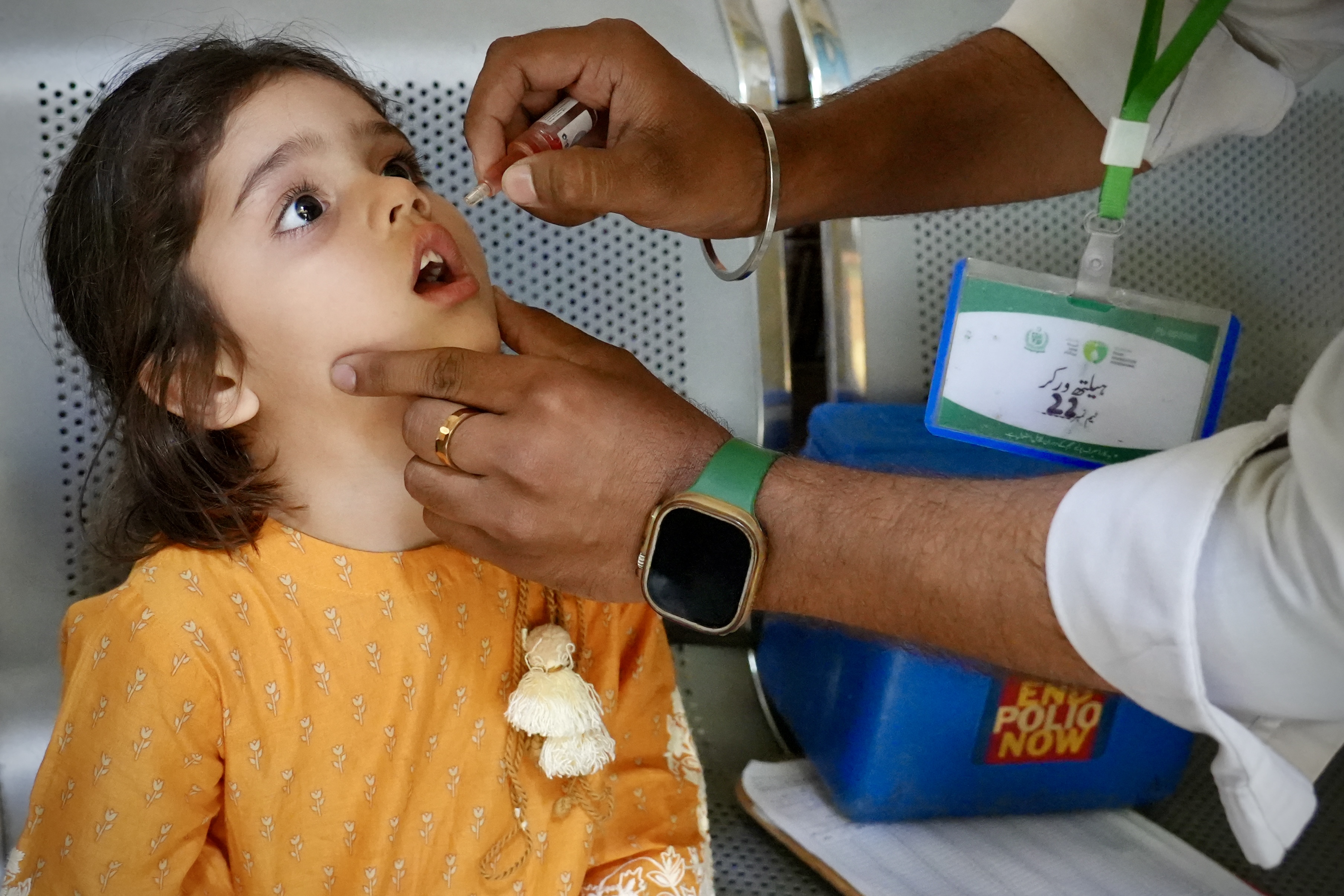
Three complementary methods.
AFP surveillance, environmental surveillance and healthy-child stool surveys give the programme a broader picture of where poliovirus may be circulating.