

The Vaccines
One of the greatest medical breakthroughs of the 20th century, now protecting every child, everywhere.
The Vaccines
The development of effective polio vaccines was one of the greatest medical breakthroughs of the 20th century. The Global Polio Eradication Initiative (GPEI) uses two types of vaccine to protect against polio and support eradication efforts: oral polio vaccine (OPV) and inactivated polio vaccine (IPV).
When enough people in a community are immunized, poliovirus has fewer opportunities to spread. Maintaining high vaccination coverage is essential to interrupting transmission and preventing outbreaks. The GPEI continually assesses how best to use both vaccines to prevent paralysis and stop poliovirus transmission in different settings.
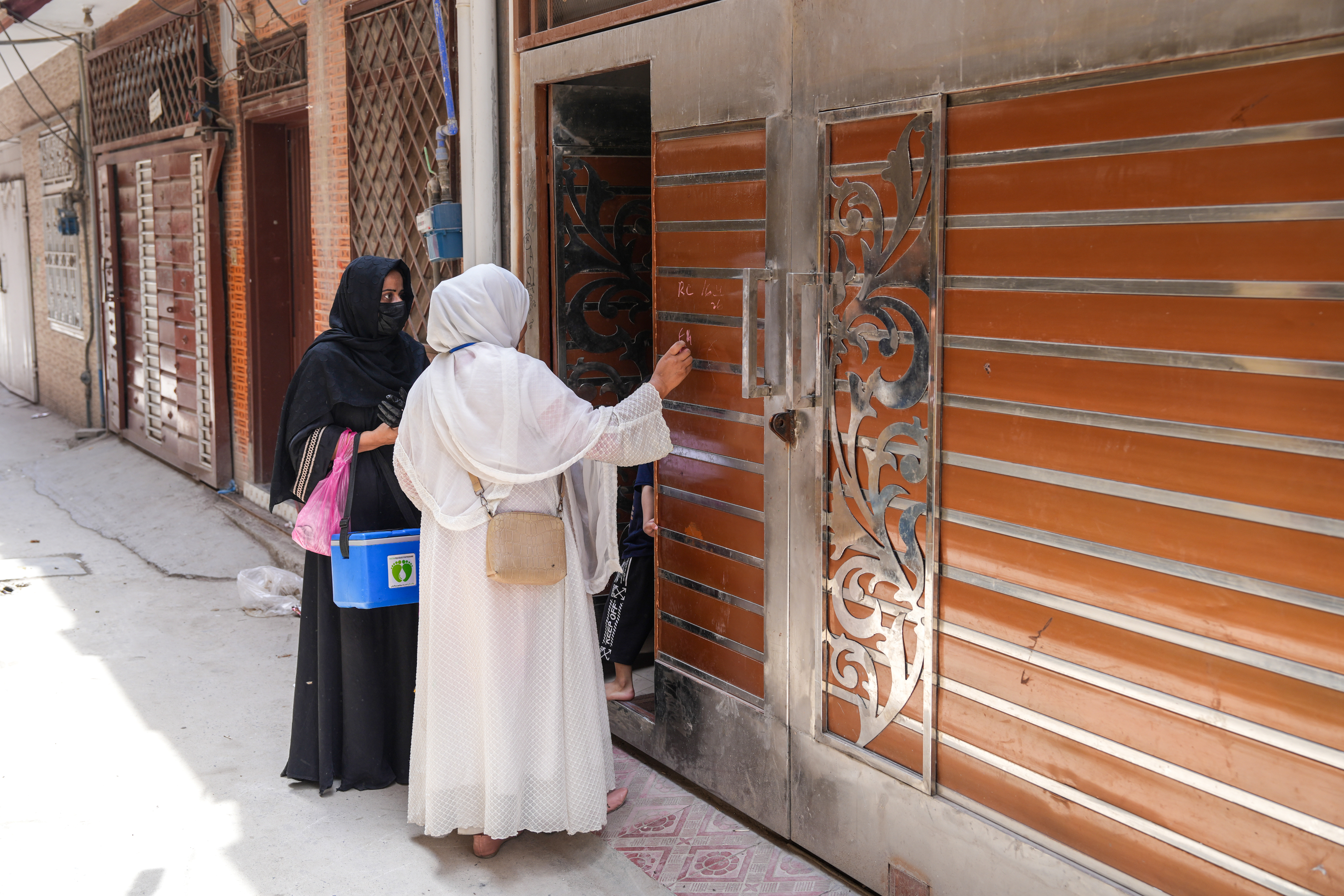
Oral Polio Vaccine (OPV)
Oral polio vaccine is safe, highly effective and widely used in the fight against polio. Different formulations have been developed to protect against one, two or all three poliovirus types.
OPV helps interrupt person-to-person transmission and is easy to administer on a large scale. Its use has contributed to a reduction of more than 99% in global polio cases since 1988, making it a vital tool in the effort to eradicate the disease.
OPV — Advantages
What makes oral polio vaccine such a central tool in mass immunization campaigns.
Affordable
OPV is inexpensive, making it suitable for large-scale immunization programmes.
Long-Lasting Protection
It provides effective, lasting protection against the poliovirus types it targets.
Additional Community Protection
For several weeks after vaccination, the weakened vaccine virus multiplies in the intestine and is shed in stools. It may spread to close contacts, sometimes providing indirect immunization to people who have not been vaccinated.
Easy to Administer
Given orally, OPV does not require needles or syringes. This makes it well suited to mass vaccination campaigns, including efforts to reach children in remote communities.
OPV — Limitations
Rare risks that public health programmes continually monitor and weigh against OPV's protection.
An Extremely Rare Risk of Paralysis
In very rare cases, the weakened virus in OPV can cause vaccine-associated paralytic poliomyelitis (VAPP). Public health programmes weigh this extremely low risk against the strong protection the vaccine provides.
Risk in Under-Immunized Communities
Where too few children are vaccinated, the weakened vaccine virus can circulate for an extended period and, in rare instances, change genetically into a form capable of causing paralysis -- known as circulating vaccine-derived poliovirus (cVDPV), also referred to as variant poliovirus.
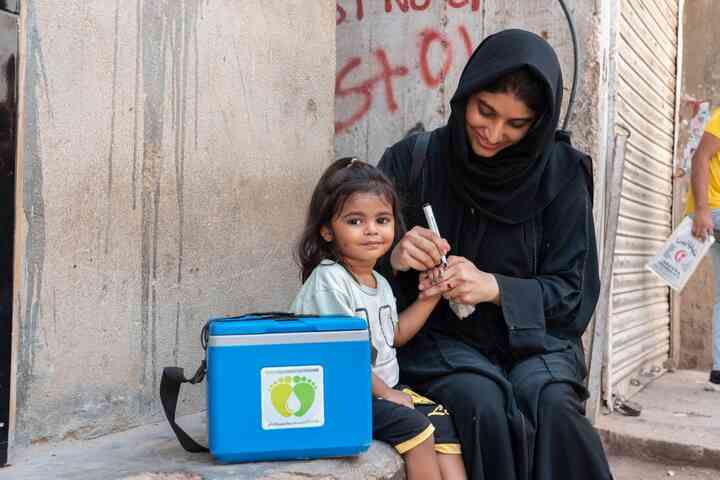
Inactivated Polio Vaccine (IPV)
Introduced in 1955 and developed by Dr Jonas Salk, inactivated polio vaccine is also known as the Salk vaccine. It contains inactivated, or killed, strains of all three poliovirus types.
IPV is administered by a trained health worker through an injection into the muscle or skin. It stimulates the production of antibodies in the blood against all three poliovirus types. If infection occurs, these antibodies help prevent the virus from reaching the central nervous system and causing paralysis.
IPV — Advantages & Limitations
How inactivated polio vaccine compares, strength for strength, limitation for limitation.
No Risk of Vaccine-Associated Polio
Because IPV contains no live virus, it cannot cause vaccine-associated paralytic poliomyelitis.
Strong Protection
IPV produces a strong protective immune response in most people.
Limited Intestinal Immunity
IPV provides limited protection against infection in the intestine. A vaccinated person may still become infected, shed the virus in their stools and contribute to its circulation.
Higher Cost and Delivery Requirements
IPV is more expensive than OPV and requires trained health workers, sterile injection equipment and safe injection procedures.
Safety, Effectiveness & Recommended Use
IPV has a strong safety record and is highly effective in preventing paralysis caused by all three poliovirus types. As an inactivated vaccine, it carries no risk of VAPP.
IPV is used for routine immunization in many industrialised, polio-free countries, where the risk of paralytic polio associated with continued OPV use is considered greater than the risk posed by imported wild poliovirus.
Using Both Vaccines Together
Because IPV provides limited intestinal immunity, OPV may be used to help contain outbreaks, including in countries that rely exclusively on IPV for routine immunization.
Once polio has been eradicated, the use of all oral polio vaccines will need to stop to prevent transmission from being re-established through vaccine-derived polioviruses.