

How vaccination teams reach families who move from place to place
Rawalpindi, Punjab:
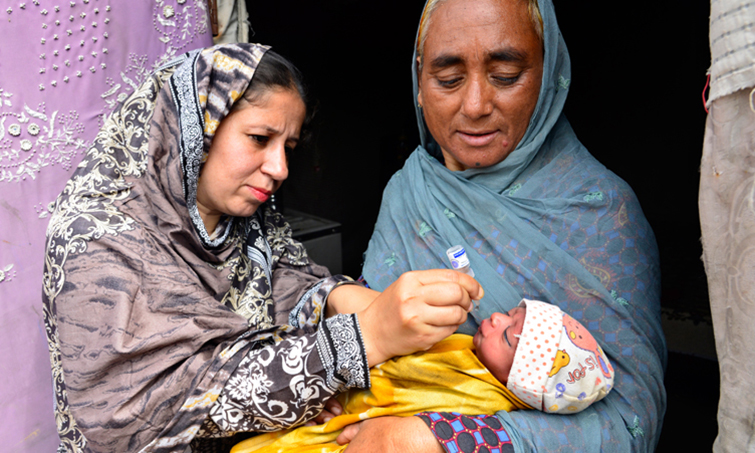
On a small muddy patch surrounded by tents in Rawalpindi, 50-year-old Sakina holds her four-day-old grandson, Zain.
The baby is about to receive his first dose of the oral polio vaccine.
Sakina has travelled from Multan with her daughter and son-in-law. They are visiting another family in Rawalpindi for a wedding. Like many families who move between cities, they could easily miss vaccination visits.
Reaching Every Child
Families often travel between cities for work, weddings, religious events or other reasons. Their children may miss vaccination when they are away from home.
Rawalpindi is one of the places where many travelling families pass through. This makes reaching these children an important part of the polio programme.
Zain is visiting a high-risk area in Rawalpindi. A team of Sehat Muhafiz vaccinators arrives with their blue vaccine carriers.
While Zain receives his two drops, his grandmother watches.
The family they are visiting also makes sure their children receive the vaccine.
“My seven grandchildren get vaccinated each time the vaccinators come at our doorstep; we do not have to go anywhere,” says Amna Bibi.
Finding Families Wherever They Go
Health workers have found new ways to reach children who are constantly on the move.
Vaccinators visit places where families work and travel. These include train stations, bus stands, busy roads, brick kilns, construction sites and agricultural areas.
They also use information about when and where families move to plan vaccination visits.
“How to reach children where they leave from and where they land, even if that ‘landing’ is only for a few days stay at a relative’s house, is by no means easy. It requires a different approach to the process of microplanning and immunization activities,” says Sidrah Nouman, a Union Council Communication Support Officer.
She says working with local communities is also important.
“The gold standard is that every child should be on someone’s micro plan. To reach travelling communities, it’s critical to enlist community leaders and prominent individuals in the immunization effort,” she adds.
Keeping Track of Children
The programme has also introduced a Blue Card for children who move between areas.
The card records the child's name, age, gender and vaccination date. It helps health workers keep track of children who receive the vaccine at transit points.
During busy travel periods, extra vaccination teams are also sent to important routes. They visit places where travelling families are likely to pass through.
Every Child, Wherever They Are
For families like Sakina's, vaccination does not have to stop because they are away from home. Health workers continue to follow them wherever they go.
Their goal is simple: make sure every child receives the protection they need, whether they are at home, travelling to another city or staying with relatives for a few days.
For Zain, it meant receiving his first polio vaccine while visiting family in Rawalpindi. For the health workers, it was another child reached and protected.


