Alishba Khan Barech, UNICEF Champion for Polio
At eight years old, Alishba Khan Barech met a girl her own age who could not walk because of polio. That encounter changed the way she saw the disease. Polio was no longer just something she heard about in the news; it was a child whose life had been changed.

Alishba Khan Barech, UNICEF Champion for Polio, at UNICEF.
“I saw polio virus not just as a virus but as a face and a future,” she recalled in an interview. Years later, that memory continues to shape her determination to help protect children from a preventable disease.
Growing up in Quetta, Balochistan, Alishba discovered her passion for writing at an early age. At just 11, she wrote her first novel, challenging common misconceptions about Pashtun culture and Islam. Her interest in storytelling developed alongside a growing commitment to children’s health: both offered ways to challenge assumptions, start conversations and make positive change.
Her advocacy began close to home. She wrote an opinion article for UNICEF about the power of vaccines and went on to participate in provincial and national initiatives promoting polio awareness and youth engagement. For Alishba, the question has remained urgent: why should any child face lifelong paralysis from a disease that vaccination can prevent?

Alishba Khan Barech speaks during a public discussion.
From Quetta to a global stage
On 23 September 2026, Alishba brought that question to New York during United Nations General Assembly week. She joined the Global Citizen NOW: Impact Sessions discussion “The Fight for a Healthy Generation in a Turbulent World,” contributing perspectives from Pakistan to an international conversation about child survival and health.

Global Citizen NOW: Impact Sessions discussion, “The Fight for a Healthy Generation in a Turbulent World,” New York, September 2026.
Participating as a UNICEF Champion for Polio and a member of UNICEF’s Global Youth Health Advisory Group, she spoke about the role young people can play in improving health outcomes. Her journey from a childhood encounter in Balochistan to a global platform demonstrates that young people are not only future leaders: they are advocates whose voices matter today.

Alishba Khan Barech with fellow participants at UNICEF
Alishba sees polio vaccination as part of a wider commitment to child survival. Protecting a child from a vaccine-preventable disease can help safeguard their future. Vaccination visits can also create opportunities for families to learn about routine immunization and other essential health services.
Trust begins with listening

Alishba Khan Barech participates in a discussion in Nairobi, Kenya, at the UN Office in 2026.
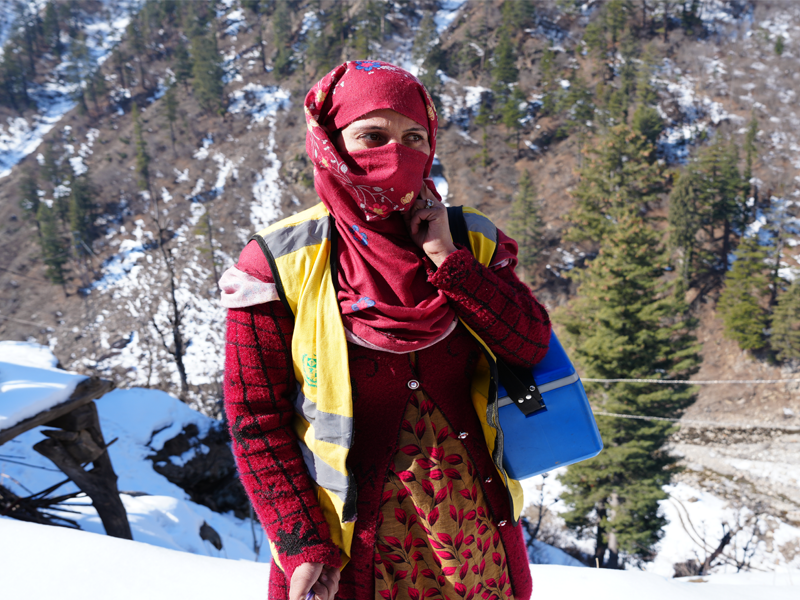
Polio vaccination teams work to reach children at home and in communities, including those who are repeatedly missed. Yet access to vaccines is only part of the challenge. Families also need reliable information, respectful dialogue and opportunities to raise their concerns without judgement.
Alishba believes young people can help bridge that gap. They can listen to parents and caregivers, challenge misinformation with accurate information, and communicate in ways that resonate with their communities. In one public conversation, she encouraged young people to begin in their own neighbourhoods, using humour to underscore the power of peer-to-peer engagement.

Alishba Khan Barech engages with a group in Islamabad, 2026.
This role complements, rather than replaces, the work of trained health workers and public institutions. Lasting confidence in vaccination depends on communities being heard and on health services being accessible, trustworthy and responsive.
A generation determined to end polio
Pakistan has made substantial progress towards polio eradication, but wild poliovirus continues to threaten children. The country remains one of the two where wild poliovirus transmission is endemic. Every missed child is a reminder that the final steps towards eradication require sustained vaccination, stronger routine immunization and continued community engagement.
Alishba credits her parents, teachers and mentors with helping her find her voice. She hopes to use that voice to encourage more young people, especially in Balochistan and across Pakistan, to take part in conversations about health and positive change.
“Today, youth voices are essential to ending polio and creating a healthier, polio-free world where every child can thrive,” Alishba says.
This World Polio Day, her story is a reminder that advocacy can begin with a single encounter—and grow into a movement for children’s futures. Ending polio will require families, frontline workers, communities, government, partners and young people to work together.

Alishba Khan Barech with Dr. Sania Nishtar, CEO of Gavi, and a Global Citizen representative at Global Citizen NOW, New York, 2026.
For Alishba, the goal is bigger than ending one disease: it is a Pakistan where every child has the chance not only to survive, but to thrive.