

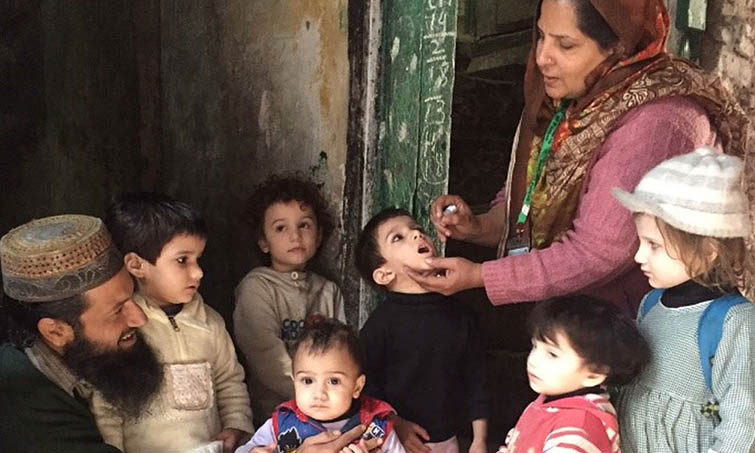
How Riffat changed her routine to reach children in old Lahore
Lahore, Punjab:
It is two o’clock in the afternoon in Union Council 29, an old part of Lahore.
Children are returning from school with bags and lunch boxes. Riffat, a Female Community Mobilizer, waits in the street with her vaccine carrier.
She asks each child a simple question:
“Did you receive polio drops at school?”
Most children say yes. But one child has not received the vaccine.
Riffat asks a few questions. She takes out a vial from her vaccine carrier and gives the child two drops.
Changing the Routine
Riffat is a mother of four. She joined the polio campaign in Punjab in 2015 after teams found many children who had missed their vaccines.
The neighbourhood is busy at night. Many shops stay open late, and some families sleep during the morning after their children leave for school.
Riffat soon realised that morning visits were not working for many families.
“It’s a norm in this part of the city, therefore we adjust ourselves to the needs of the locals and have started visiting the households in the evening,” says Riffat.
She began visiting homes later in the day. This gave parents a better chance to be at home when vaccination teams arrived.
Finding Children Who Were Missed
The area is home to more than 7,000 children under five. Many families have moved to Lahore from areas where polio is still a risk.
Before Riffat began evening visits, many children were missed during the five-day campaigns.
“Previously at the end of five days we had 50 per cent of the children who were without vaccine. The teams visited in the morning, knocked at the doors regularly but without any avail,” says Irfan Shafi, the Union Council Medical Officer.
After Riffat started visiting families in the evening, things began to change.
“As soon as Riffat started visiting the UC in the evening things have changed. She asked for a convenient time of vaccination from the caregivers. Now it is regular practice that polio teams follow up children after they return from school and are ably joined by Riffat bibi,” says Shafi.
The change was clear.
“Vaccination during campaigns is now 100 per cent. The good part is that Riffat continues vaccination even after the five-day campaign has finished till all the children have been vaccinated,” Shafi says.
Every Child Matters
Riffat continues to visit families even after the official campaign ends. She makes sure children who missed the vaccine are reached.
Her work is part of a wider effort in Lahore, where community mobilizers help families access health services and make sure children receive their vaccines.
For Riffat, the work is simple. She listens to families, adjusts to their routines and keeps coming back until every child is vaccinated.
“My neighborhood is located in the heart of old Lahore and home to very friendly people. So I respond to them equally well by taking care of their children who are at heightened risk of polio in the city. I am a Sehat Muhafiz, are you?” Riffat asks with a broad smile.


