

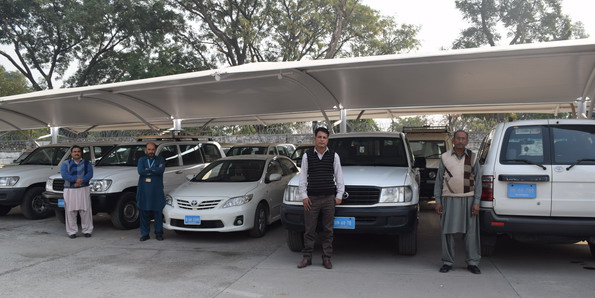
How drivers help health teams reach children across Pakistan
Islamabad, Pakistan:
Before most polio teams begin their work, drivers are already on the road.
They take health workers to homes, communities and field sites across Pakistan. Their work helps vaccination teams reach children during polio campaigns.
For many drivers, the job is more than driving. They also help keep their passengers safe and guide them through areas they know well.
More Than Just Driving
Bahudar Shah, 53, Islamabad
Bahudar has worked as a driver with the WHO polio programme for 20 years.
He starts his day early. He makes sure his vehicle and passengers are safe. Over the years, he has driven both local and international staff to field sites.
“It doesn’t matter whether you’re in the driver’s seat or the passenger seat, driving is an unavoidable and essential part of the polio programme, especially here in Pakistan, where the push for eradication is at such a sensitive and critical point. I have spent the last 20 years as a driver with WHO’s polio programme, always with the same focus: saving Pakistani children from this disease and securing a better future for them."
Bahudar also sees himself as responsible for the safety of the field officer travelling with him.
Keeping Teams Safe
Alam Sher Khan, 52, Islamabad
Alam joined WHO in 2002. For him, the job is more than driving.
“I joined WHO in 2002 and since then I have learned, I am working for the welfare of future generations. At work, I apply the “safety first” approach to every part of my job. I think, I am not only driving but I also act as a guide and security guard for my field officer."
Before field work begins, Alam speaks with officers about local customs and the safety situation in the area. He also helps keep the vehicle in good condition and can make minor repairs when needed.
Helping Teams Reach Families
Ghulam Asghar, 59, Islamabad
Ghulam has worked as a driver in the polio programme for 16 years.
He works closely with field officers during vaccination campaigns and case investigations. He helps them find local vaccination teams and reach communities.
“For the last 16 years, I have played a significant role in polio eradication in Pakistan. My level of responsibility as a driver is very high. Polio eradication is a programme that requires strong teamwork."
When families refuse the vaccine, Ghulam also helps the field officer speak with them. “When my officer covers refusals during campaign monitoring, it gives me the most satisfaction as I feel that we have saved a child from permanent disability. When there is some refusal I actively assist my officer to counter that refusal."
A Shared Goal
Jamil Abbasi, 46, Islamabad
Jamil has been a driver for the polio programme for 14 years. He believes every member of the programme has an important role.
“I have been a driver for the polio programme for the last 14 years. I think whether you are a polio eradication officer, data personnel, technical staff, a consultant, a member of the communication team or a driver, every single employee is playing a very significant role in polio eradication efforts."
His job is to safely take field workers to the areas where they are needed.
“I have a strong wish to see Pakistan polio free. Although I am not directly involved in eradication activities, indirectly I am contributing to better implementation and success of routine immunization efforts by safely transporting field officers to their assigned duty areas. I am proud that I am a part of hardworking team who are trying to defeat the polio virus.”
For these drivers, every journey has a purpose. They help health workers reach communities and support vaccination teams.
Their work may happen behind the wheel, but it plays an important part in protecting children from polio.


