By Wasif Mahmood
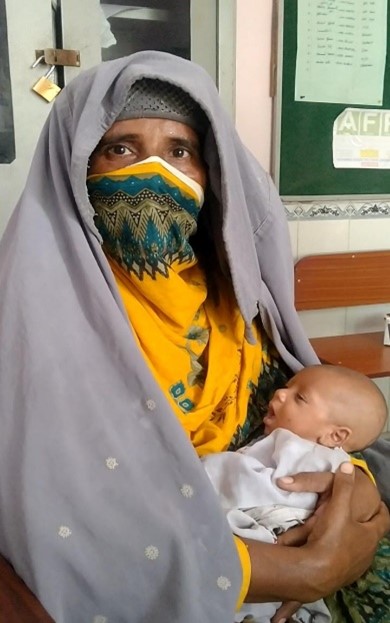
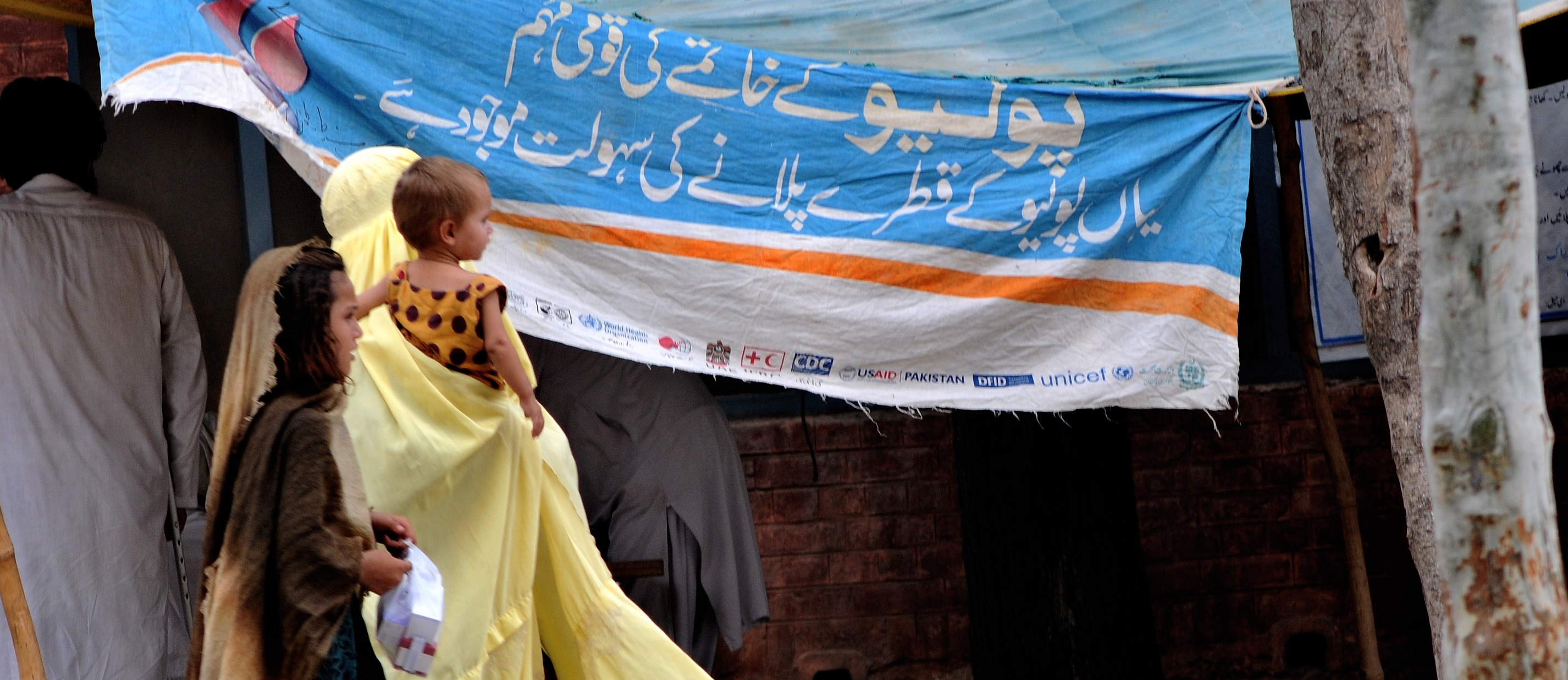
Bannu, 06 NOV 2014 - Women wearing traditional head-to-toe veils (burqa) stood in a corner holding their children at the vaccination centre as authorities scrambled to cater to huge vaccination demand of the displaced families in Bannu district of northwest Pakistan.
This year military operations in North Waziristan have displaced one million people. Hundreds of thousands of children who moved with their families out of the region have not been vaccinated for more than two years. More than 70 per cent of the polio cases in Pakistan hail from the tribal area of North Waziristan after a ban on polio vaccination was imposed by local leaders back in July 2012.
While the movement of the displaced families offered an opportunity to vaccinate the previously inaccessible population, the risk of the virus travelling with these children and their families to other parts of the country poses big threat to the success of polio eradication, not only in Pakistan but globally.
“The demand for vaccination has increased significantly. Before the military operation, less than 10 children were vaccinated daily at the centre, but now an average of 55 children are brought for vaccination against polio, measles and other preventable diseases”, said Dr Yaqoob, the Union Council Medical Officer (UCMO) at this Rural Health Centre.
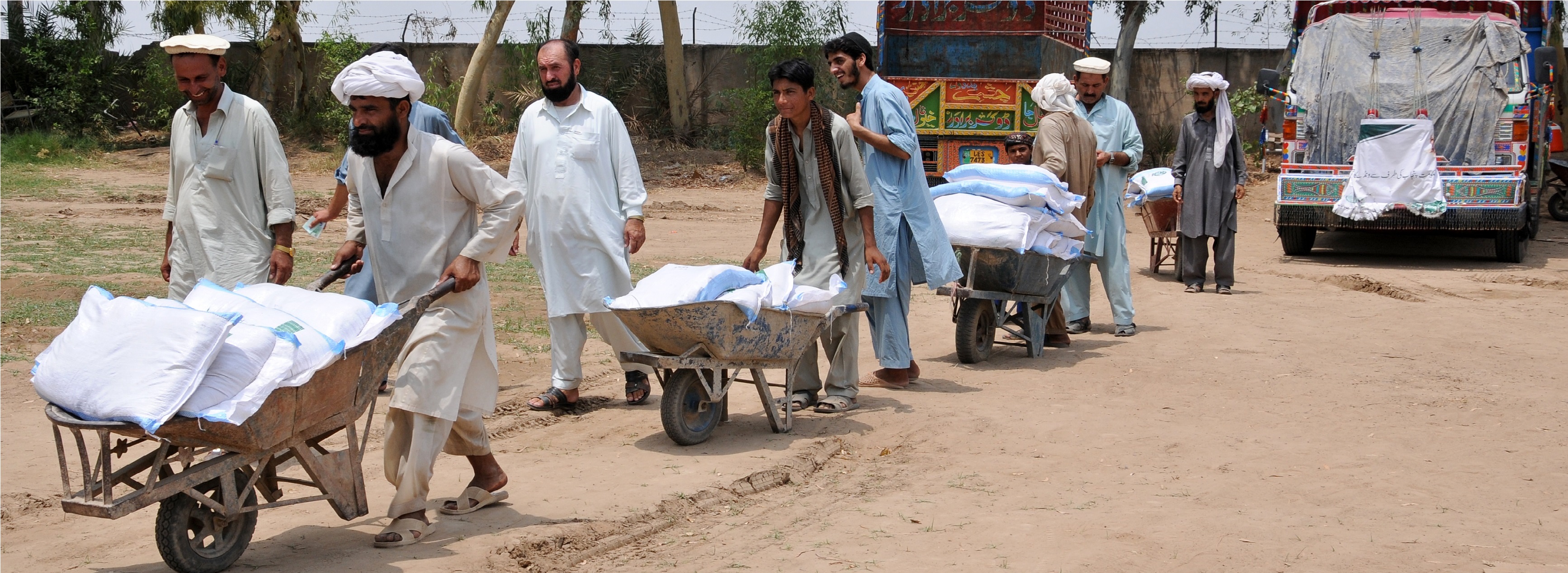
Few yards away, a small but significant number of men wait in queues to receive food ration including ghee, oil and flour. Among the crowd of bearded and turbaned men, a tall, bright and clean-shaved Salman Shah, a young boy in his teens, stands out as he waits under a tent to receive aid. Unlike other IDPs, he appears to be more shaken by the displacement and its miseries.
“I strived to complete my education with majors in Political Science and appear in competitive examination but the unrest and fear has put my life and dreams on hold”, he said in a heavy voice.
“Health and education services had been suspended for the last four years. Hospitals were closed and last ones functioning were located in Mirali and Miranshah only”, he revealed.
“I wish vaccination along with education activities resume as early as possible. It is the only way we can ensure healthy life for children and have our normal lives back,” said Shah.
“The educated youth share the responsibility of helping health workers in eradicating polio from all over Pakistan. As part of a young Pakhtun community member, I extend all my support to health workers who go door to door so that our children may be shielded from life-taking diseases like polio”, he said.
Lack of vaccinators’ access to communities in North and South Waziristan, as well as other parts of Federally Administered Tribal Areas (FATA), resulted in an explosive outbreak of polio in Pakistan. Out of 235 children paralyzed by polio so far in 2014, 199 have been reported from FATA and Khyber Pakhtunkhwa (KPK), 88 of which are from North & South Waziristan agencies.
While other provinces of Pakistan like Punjab and Sindh may not have a very high number of polio cases but displacement from FATA and KPK makes them more vulnerable to polio virus.
The children paralyzed by polio in Punjab’s Chakwal district and Rawalpindi’s Murree tehsil recently provide unquestionable evidence of the unpredictable speed and means of polio virus transmission, especially in emergencies that hit hard those who are not protected by the vaccine.
The first polio case of Punjab, a child from Chakwal, who suffered onset of paralysis on July 7, lived just two blocks away from a host community for North Waziristan Temporarily Displaced Persons (TDPs). The second case from Bhakkar district, an 18-month female child, suffered paralysis on August 16, was genetically linked to South Waziristan. A third 8 months old polio causality from Punjab who had onset of paralysis on September 18 was found to be closely linked to polio virus strain found in Gadap, Karachi.
The challenges of displacement are a major threat to the polio eradication efforts in KPK. The provincial government has taken special measures to vaccinate some 700,000 displaced individuals between May and September this year.
“We are including all displaced children in Bannu, Lakki Marwat, DI Khan and Peshawar into the micro plan to ensure they are vaccinated in the next campaigns. A network of transit points has been established to vaccinate families on the move”, said Dr Rahim Khattak, Assistant Director Expanded Programme on Immunization in Khyber Pakhtunkhwa.
“The majority of the displaced families are living in school buildings or in host communities in Bannu district. While health services are being improved at health centres, all the families living in hosting areas will be reached through health workers who will go door to door”, explained Dr Khattak.
“We have utilized all communication channels to convey to the families moving out of Waziristan about the checks they need to undertake before embarking on travel, during journey and after arriving. Messages are addressed simultaneously host families to inform health teams and facilities about the arrival of guests at their homes”, Dr Khattak explained.
“Before travel the families need to verify the vaccination status of their children and carry the vaccination cards. During travel they need to cooperate with health teams and show up the cards if asked. After arriving, the guests need to show up at health centres for free of cost vaccination and cooperate with health teams. Similarly hosts also share the responsibility of informing health teams about presence of guests in their homes so that their children may be vaccinated on time”, Dr Khattak elaborated.
“How long we will wait to see the day when the polio menace has been eradicated from Pakistan and how many more children will be paralyzed to act? “ asked Salman.