

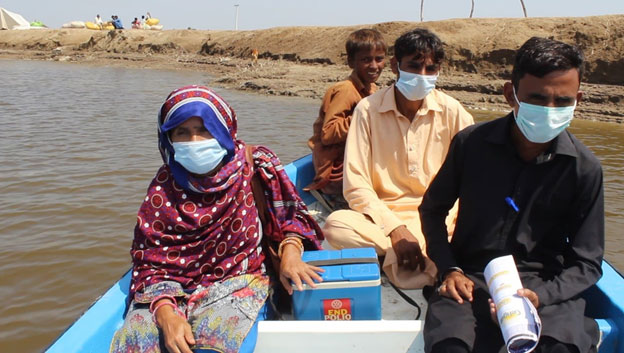
How frontline health workers in flood-hit Sindh went the extra mile to deliver polio vaccines
Mirpur Khas, Sindh:
When severe floods submerged villages across Mirpur Khas, reaching children with life-saving vaccines became extremely difficult. Roads disappeared beneath the water. Many families were displaced. Entire communities became isolated. But for frontline health workers, the campaign could not stop.
Vaccinators were determined to protect every child from polio. They crossed muddy fields and floodwaters to reach children. Their commitment ensured that even during Sindh's most difficult crises, children continued receiving the protection they needed.
Reaching Children Despite the Floods
Mirpur Khas received more than 400 millimetres of rainfall in September. The rains caused severe flooding. Flooding affected 22 union councils. The disaster left around 600,000 people displaced or cut off from essential services.
"The floods created enormous challenges," said Abdul Wahid Sheikh, Commissioner of Mirpur Khas. "Many communities became hard to reach. Thousands of people had to move into camps or temporary shelters."
For Lady Health Worker Amina, every vaccination visit became a test.
"It was extremely difficult," she recalled. "The first day I tried to cross the water, I got stuck. The second day, I almost drowned. On the third day, I finally made it across and vaccinated about 30 children."
Across the district, health workers faced similar challenges. Some walked for hours through stagnant floodwater. Others used boats to reach isolated villages for the vaccination of children. Winning Trust During a Crisis Flooding created more than just physical barriers. Many families struggled to recover from the disaster. They questioned why vaccination teams had arrived before other forms of assistance. "People were upset," said Muhammad Saleem Shaikh, the Assistant Commissioner of Mirpur. "Some parents wanted flood relief before agreeing to vaccinate their children."
Health workers, local officials and community leaders responded by visiting families and hearing their concerns. They explained why children still needed protection against polio. Their efforts helped families understand that vaccination was essential, even during the floods.
One community leader, Haji Karim Bakhsh Shar, worked alongside vaccination teams to encourage families to accept the vaccine.
"I went from village to village explaining that we could not put children's health at risk," he said. Gradually, attitudes began to change.
"We refused at first because of the floods," said Chanesar Shar. "But we understood that protecting our children from polio should never be used as a bargaining chip."
Every Child Matters
Frontline workers continued visiting homes until every accessible child had a chance to receive the vaccine despite the conditions.
"I believe it is our duty to protect Pakistan's children," said Amina. "We will cross every barrier to reach them with life-saving vaccines."
The campaign showed that even during a humanitarian emergency, community partnerships and dedication can help protect children from vaccine-preventable diseases.
In Mirpur Khas, the greatest success was not crossing floodwaters. It was ensuring the protection of thousands of children in difficult circumstances against polio, bringing Pakistan one step closer to a polio-free future.


