
Early in the morning, while most families are still starting their day, women frontline workers across Pakistan are already on the move.
They walk through narrow streets, knock on doors, and carry small vaccine carriers filled with polio drops. Their goal is simple but powerful, to protect every child from polio.
For parents and caregivers, these women are often the first point of contact for information about vaccines and children’s health. They patiently answer questions, reassure families, and make sure that every child under five receives life-saving protection.
Across Pakistan, thousands of women frontline workers are helping families keep their children healthy. Pakistan’s polio programme is supported by a large network of more than 400,000 frontline workers, around 60% of whom are women. These dedicated workers travel across communities during vaccination campaigns to make sure every child receives protection from polio.
Building Trust in the Community
Many frontline workers serve in the same neighborhoods where they live. This helps them connect with parents and caregivers in a natural way.
When they knock on doors, families recognize them as members of the community. Mothers feel comfortable asking questions about vaccines, and children often greet them with curiosity and smiles.
These simple conversations help build trust. Over time, families begin to see these workers not just as health workers, but as community supporters who care deeply about children’s wellbeing.
Women frontline workers are an important bridge between communities and healthcare services. Through their dedication, more families understand the importance of protecting children through vaccination.
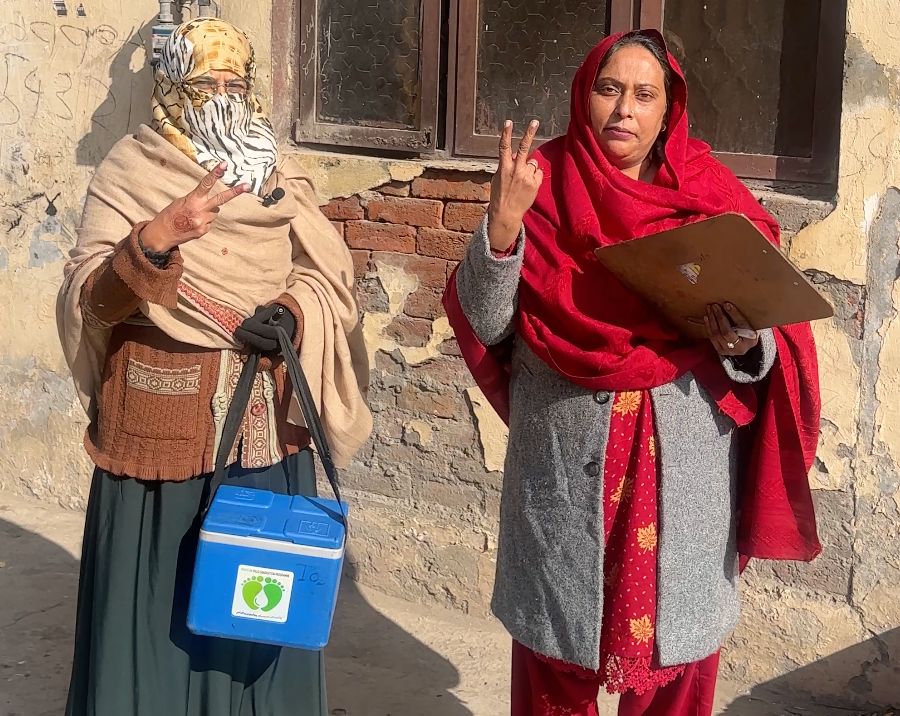
Naseema Nasir: 23 Years of Protecting Children
For Naseema Nasir, protecting children from polio has been part of her life for more than two decades. Naseema has worked as a frontline health worker for 23 years. Her day begins early in the morning. Before leaving for work, she prepares breakfast, gets her children ready for school, and organizes her home.
By around 8 a.m., she begins her field work. From house to house, she visits families to make sure children receive their polio drops. For Naseema, every child she meets feels personal. “Whenever I vaccinate a child, I see my own children in them,” she says.
Her work requires patience and persistence. Some families welcome her warmly and thank her for the visit. Others may take time to open the door or ask many questions before agreeing. But Naseema approaches every family with respect and calm. Her goal is simple, no child should miss the polio vaccine.
After a long day in the field, she returns home to continue her responsibilities as a mother. Despite the busy schedule, she remains proud of the work she does.
For her, protecting children’s health is one of the most meaningful responsibilities she can carry.
Fazeela Rumail: Reaching Every Child
For Fazeela Rumail, every vaccination campaign begins before sunrise. She wakes up after Fajr prayer and prepares for the day ahead. After finishing household tasks and breakfast for her family, she quickly heads to the office.
By 7:30 in the morning, she joins her colleagues for a meeting before heading into the field. From there, she walks through neighborhoods to visit families and ensure children receive their polio drops.
Sometimes the work can be challenging. Not every door opens right away, and some people ask questions or request that the team return later. But Fazeela remains determined.
“We make sure that no child is left behind,” she says. Her motivation comes from the children she meets every day. She believes that every child deserves the chance to grow up strong and healthy.
When families welcome her and bring their children forward for vaccination, it reminds her why the work matters.
Women Empowering Families
Women frontline workers are doing more than delivering vaccines. They are also empowering parents and caregivers with knowledge. During their visits, they explain why vaccines are important and how they protect children from serious diseases.
For many mothers, these conversations are valuable moments to learn more about their children’s health. Women workers also inspire other women in the community. When young girls see women working in healthcare and helping families, it shows them that they too can play an important role in society.
This is a powerful example of women empowerment in action.
A Shared Responsibility for Children’s Health
Protecting children from polio is a shared effort between families and frontline workers. When parents’ welcome vaccination teams and allow their children to receive the polio drops, they help ensure that every child in the community stays safe.
For women like Naseema and Fazeela, the reward is simple but meaningful, seeing healthy children playing and growing up without the threat of polio.
Every knock on a door, every conversation with a caregiver, and every vaccinated child brings Pakistan one step closer to a polio-free future.
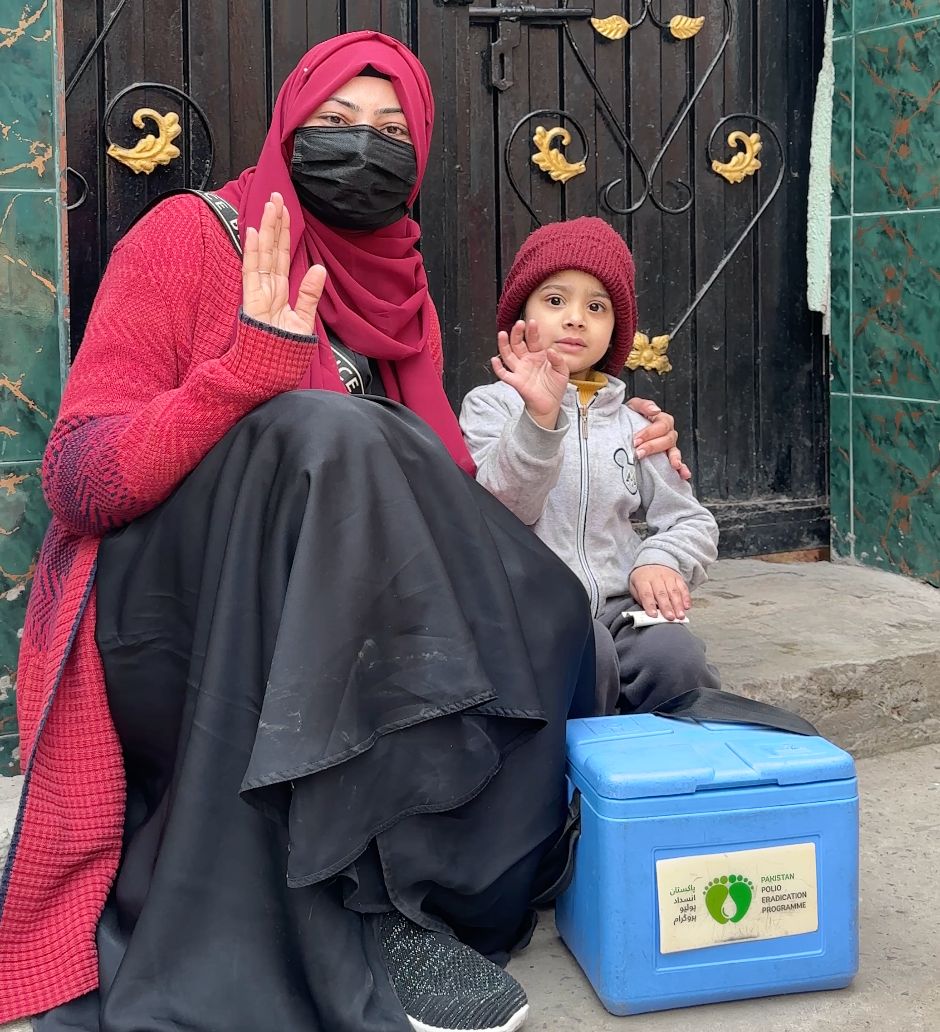
A frontline health worker sits with a young child during a community vaccination visit, building trust with families while helping protect children from polio.